 EARN Interiors
Journal··1 min read
A pooja unit that still belongs to the house
A pooja corner can be quiet without being hidden. Notes on height, light, and how we join the unit to a wardrobe or ceiling so it belongs to the house.
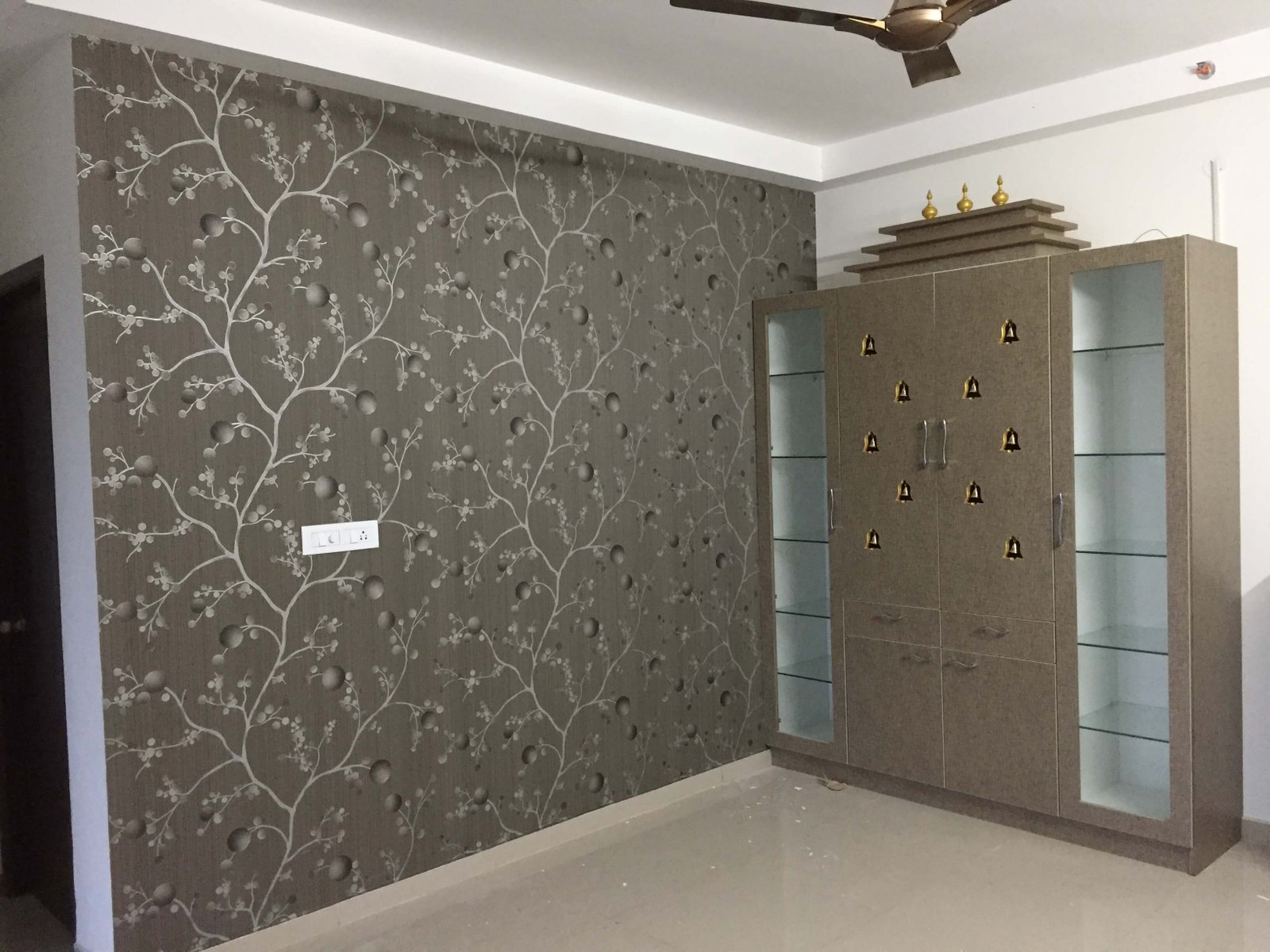
Families ask for a pooja space in very different rooms: a corner of the living room, a niche beside the wardrobe, sometimes a full wall of its own. The requirement is the same. It should feel set apart for a few minutes in the morning, and it should still look like part of the home for the rest of the day.
Height, light, and what is stored
We place the deity shelf at a height that is comfortable to reach, with a closed cabinet below for oil, wicks, and cloth. A drawer for incense keeps the daily things off the shelf. If agarbatti is used every morning, we plan a small exhaust or at least a finish that will not stain, and we keep fabric wallpaper away from that spot.
Light is warm and local. A concealed strip inside the niche is enough. A bright downlight aimed at the shelf tends to flatten it. Where the unit sits under a false ceiling, the cove can frame the corner without turning it into a stage.
Joining it to the rest of the joinery
- Beside a wardrobe, the shutter line and handle height should match, so the pooja reads as a pause in the same wall.
- In a living room, a lower cabinet can continue into the TV unit if the two share a material.
- A patterned wallpaper works behind the shelf when the rest of the room stays plain. The pattern is the frame, not a second design.
We do not treat the pooja unit as an add-on ordered after the rest of the house is finished. If it is in the brief, it is drawn with the ceilings, the wardrobe, and the electrical points. That is what keeps it tranquil instead of cramped.
From the studio
Tell us about the room you want to change.
More from the journal
View all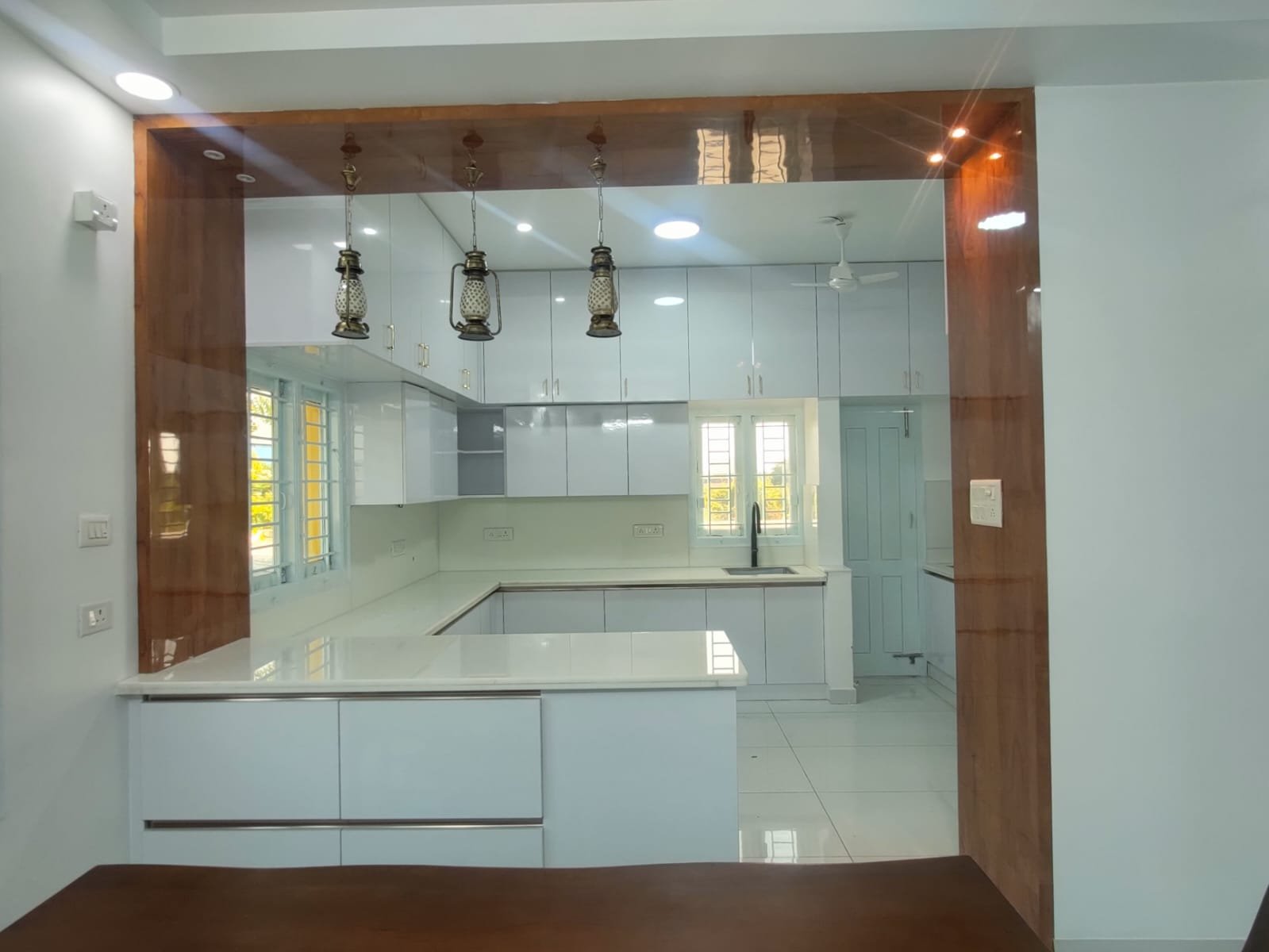
12 September 2026
A modular kitchen that fits the way you cook
In a Chennai apartment, the kitchen is usually the room that has to work hardest. We plan storage, the work sequence, and finishes before a single shutter is ordered.
Read the story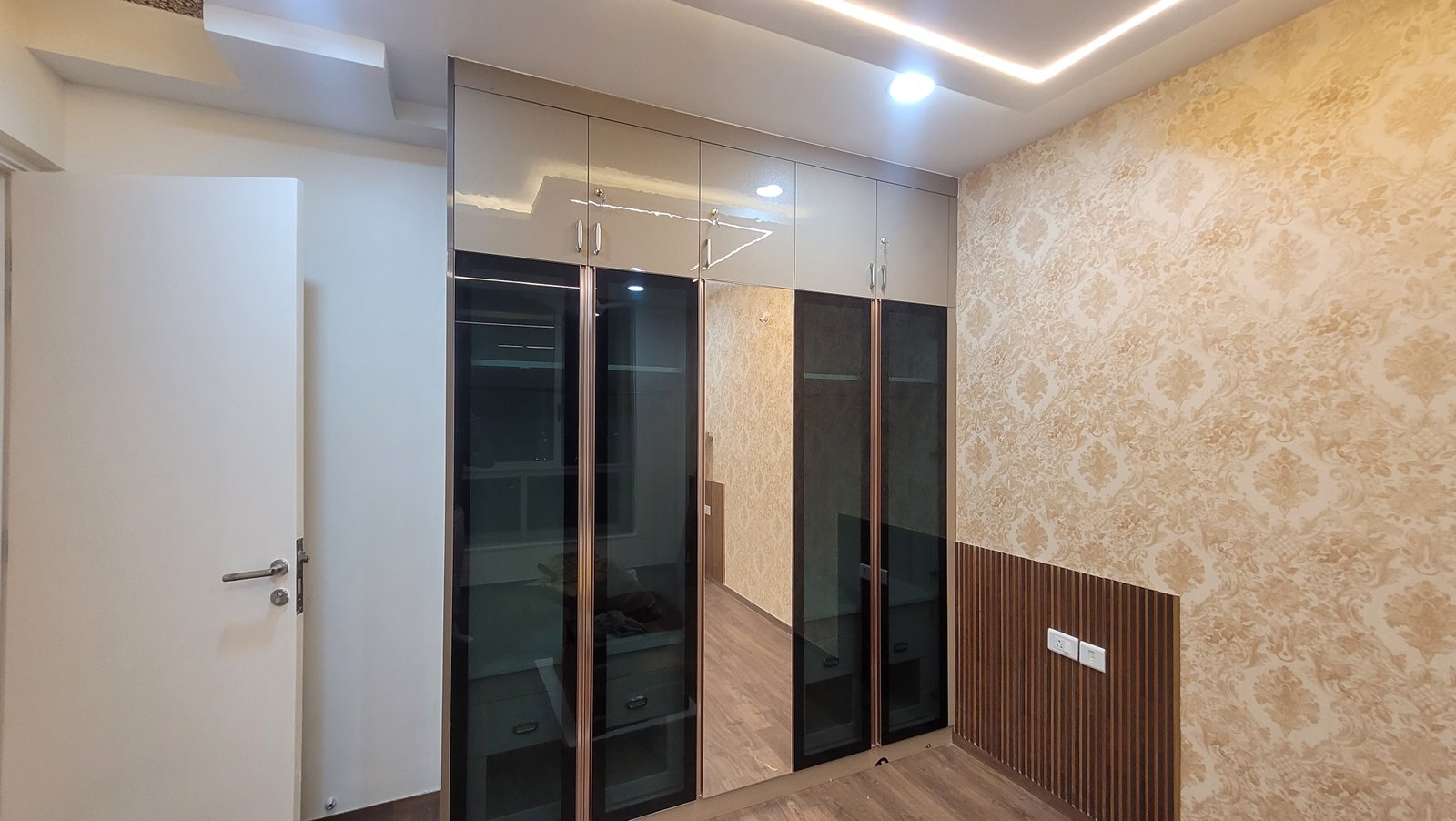
18 August 2026
Wardrobes built for the wall you already have
A wardrobe should disappear into the bedroom until you open it. We size storage to the clothes you own, the loft you can reach, and the wall the builder left you.
Read the story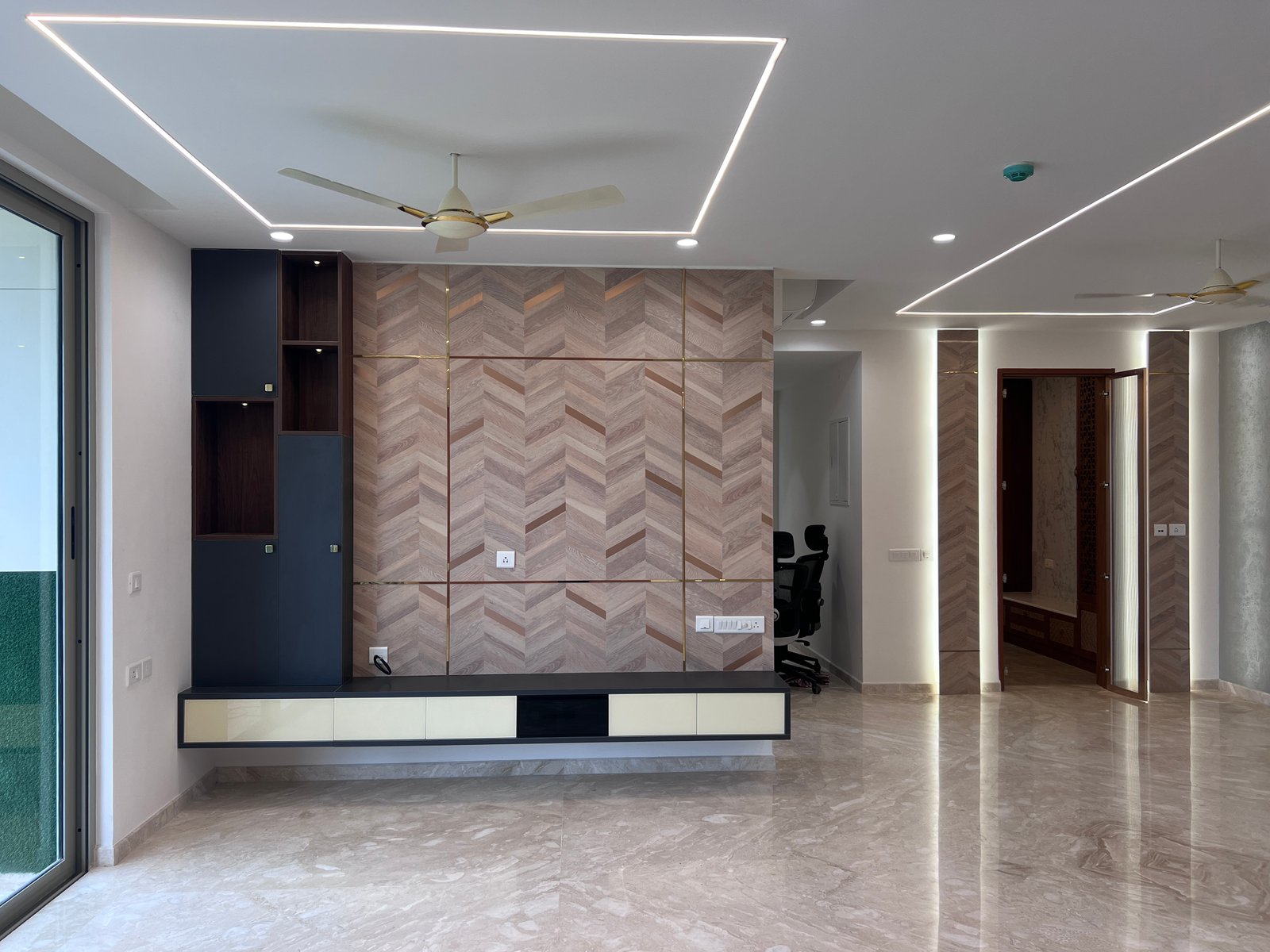
22 July 2026
The living room wall everyone sees first
The TV wall is the first thing a guest reads. We treat it as furniture, storage, and lighting together, so the room stays calm after the set is switched off.
Read the story