 EARN Interiors
Journal··1 min read
The living room wall everyone sees first
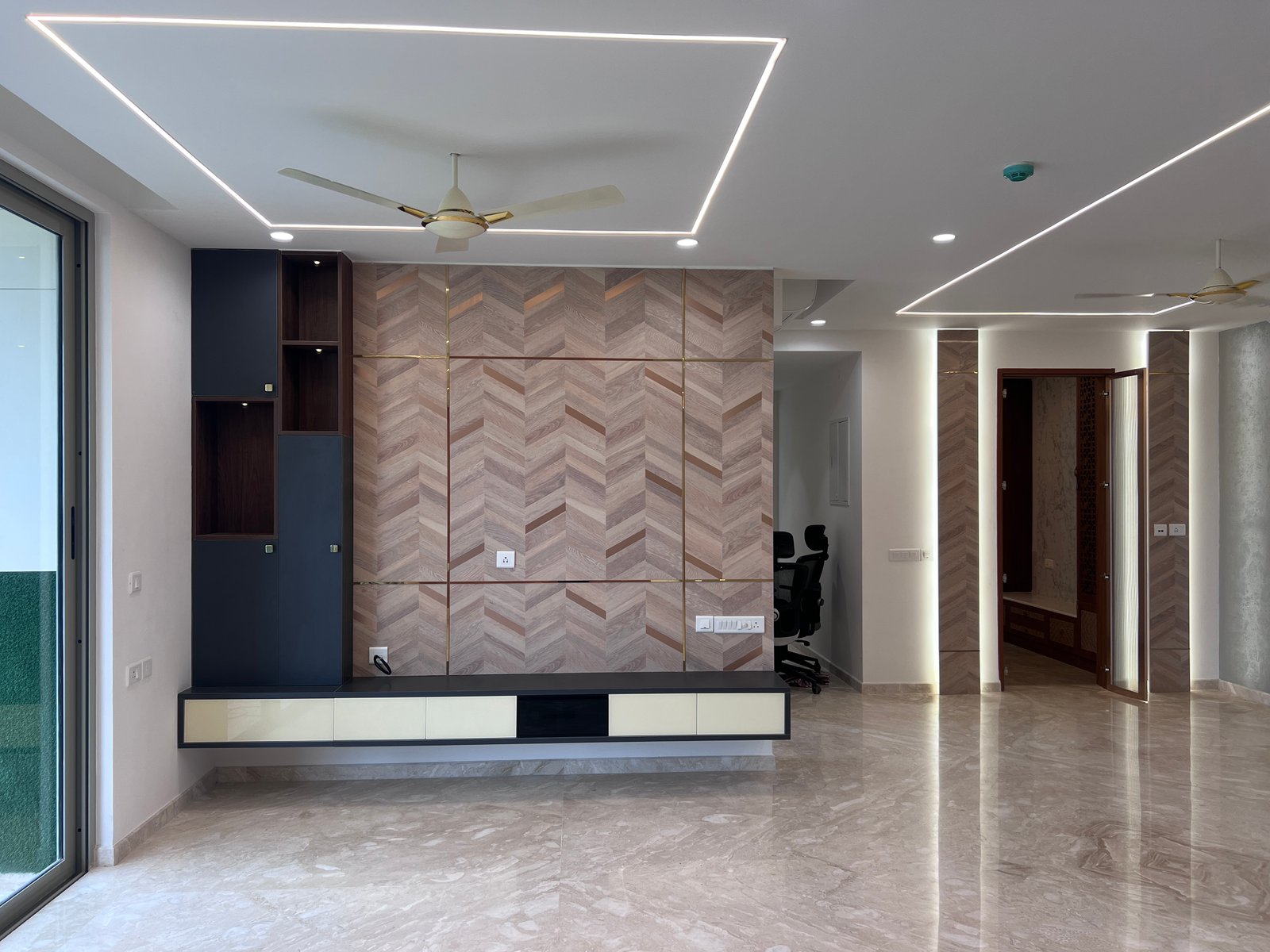
The TV wall is the first thing a guest reads. We treat it as furniture, storage, and lighting together, so the room stays calm after the set is switched off.
In most of the homes we work on, the living room is also the room where guests sit, children do homework, and the television stays on through the evening. The wall behind the screen has to hold all of that without looking like a shop display.
One wall, three jobs
A TV unit is storage, a place for the set, and the backdrop of the room. We decide the height of the screen from the sofa, not from the ceiling. Below it, closed storage takes remotes, routers, and the objects that do not need to be on show. Open shelves are kept few, and only for things the family is happy to dust.
Where the living room shares a wall with a bedroom or a passage, we sometimes continue the same joinery so the TV unit, a wardrobe, or a shoe rack read as one piece. The room feels larger when the lines do not stop and start at every doorway.
What we keep off the wall
- Too many open niches. They fill up, and then the wall looks unfinished.
- A backlight that glares on the screen. Cove light belongs above or beside the set, not in the viewer’s eyes.
- A unit so deep that it steals the walking space in front of the sofa.
Cable routes are planned before the carpenter closes the carcass. A clean wall is mostly a question of where the power point and the set-top box were allowed to sit. Once that is settled, the finish can stay simple: a laminate or veneer that matches the flooring, and a stone or fluted detail only if the room still has somewhere quiet to rest the eye.
From the studio
Tell us about the room you want to change.
More from the journal
View all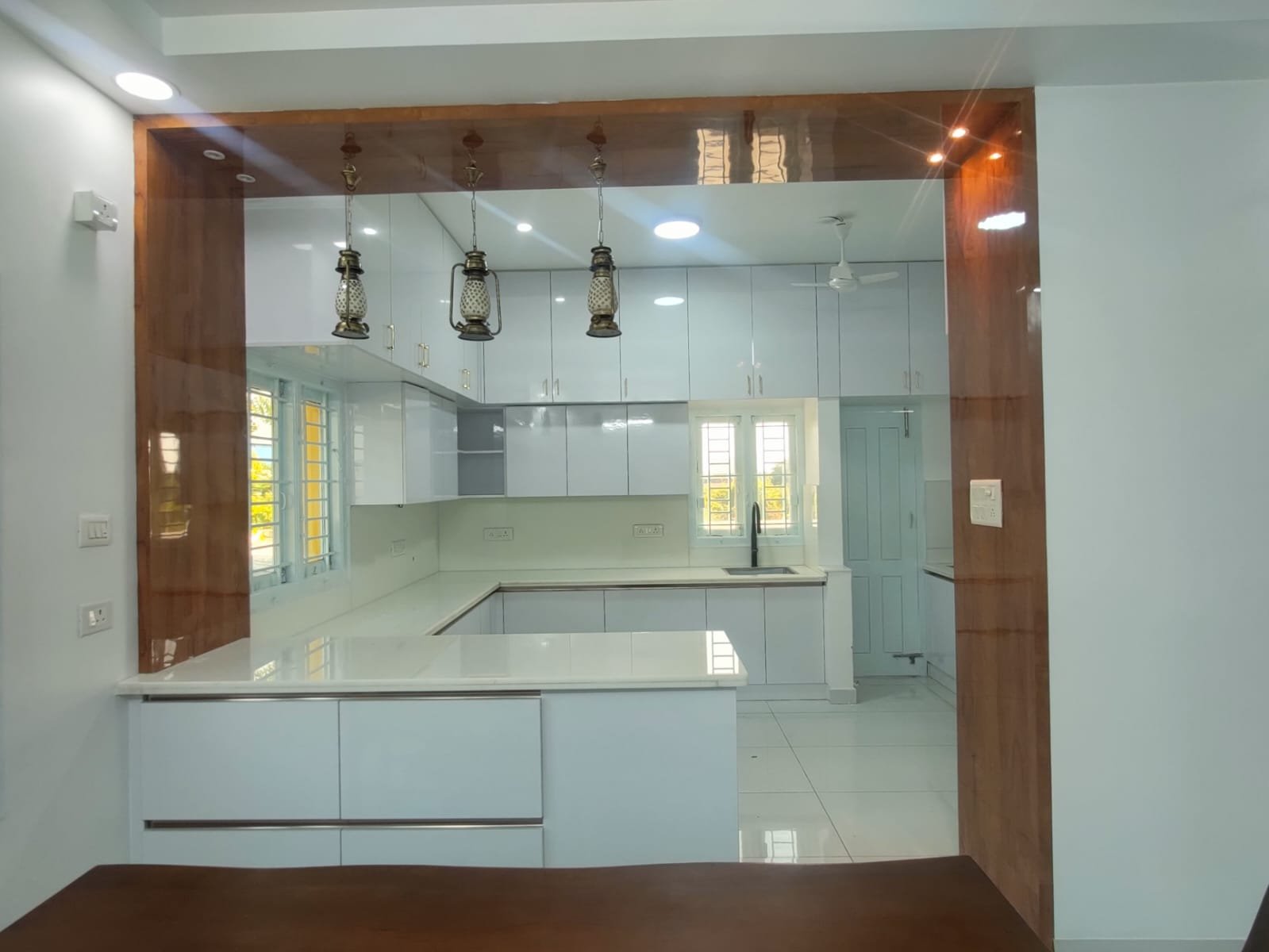
12 September 2026
A modular kitchen that fits the way you cook
In a Chennai apartment, the kitchen is usually the room that has to work hardest. We plan storage, the work sequence, and finishes before a single shutter is ordered.
Read the story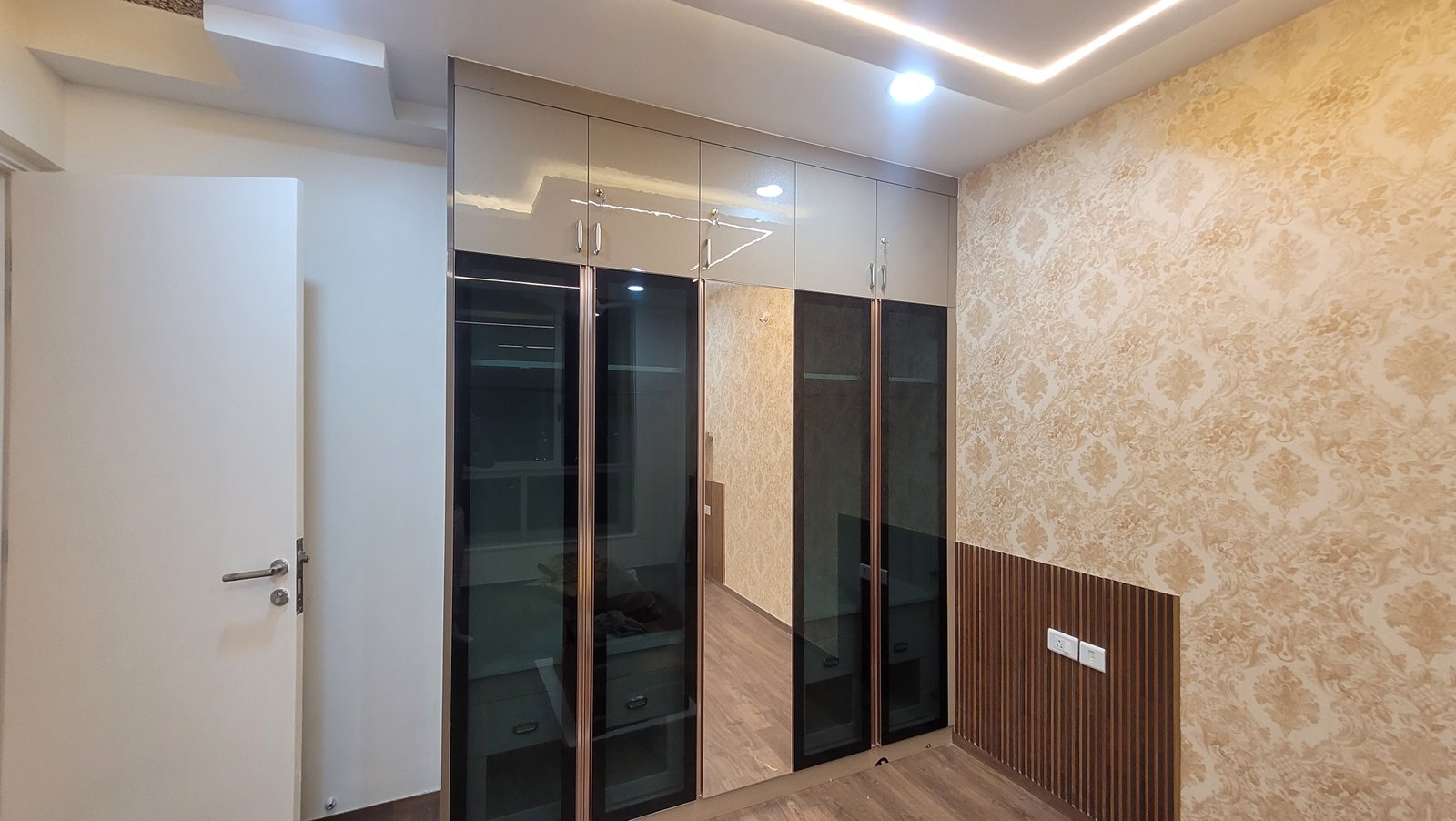
18 August 2026
Wardrobes built for the wall you already have
A wardrobe should disappear into the bedroom until you open it. We size storage to the clothes you own, the loft you can reach, and the wall the builder left you.
Read the story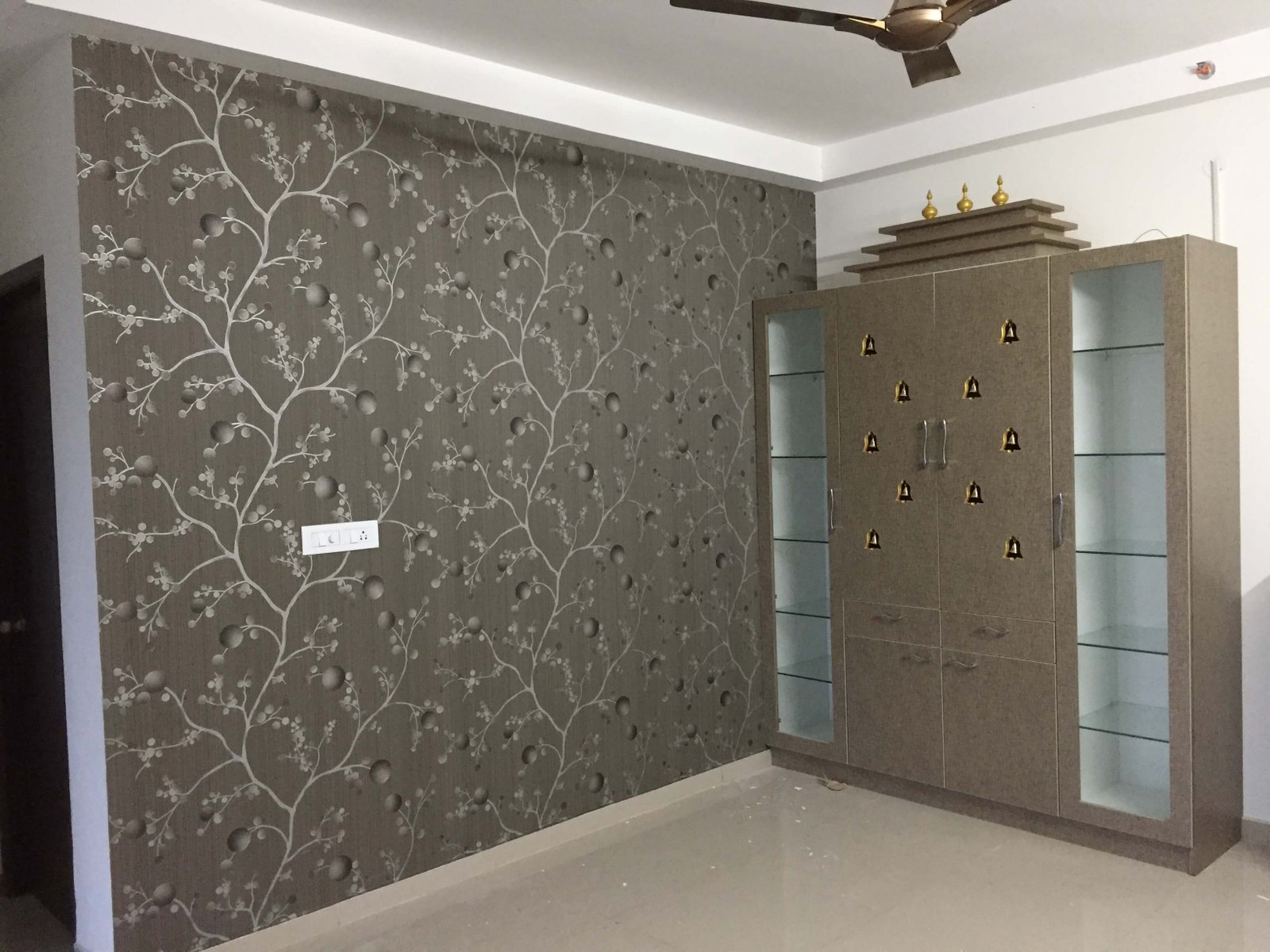
30 June 2026
A pooja unit that still belongs to the house
A pooja corner can be quiet without being hidden. Notes on height, light, and how we join the unit to a wardrobe or ceiling so it belongs to the house.
Read the story